26 October 2026
You are a little behind another boat on a beat, but you are to windward. In clear air, you would normally sail faster and point higher. It ought to be possible to work your way past.
Yet the gap refuses to close. You try to squeeze a little higher, lose speed, and find yourself stuck alongside or slipping backwards.
The wind around the two boats offers an explanation. You can be in a less favourable part of your competitor’s wind field while they are in a more favourable part of yours.
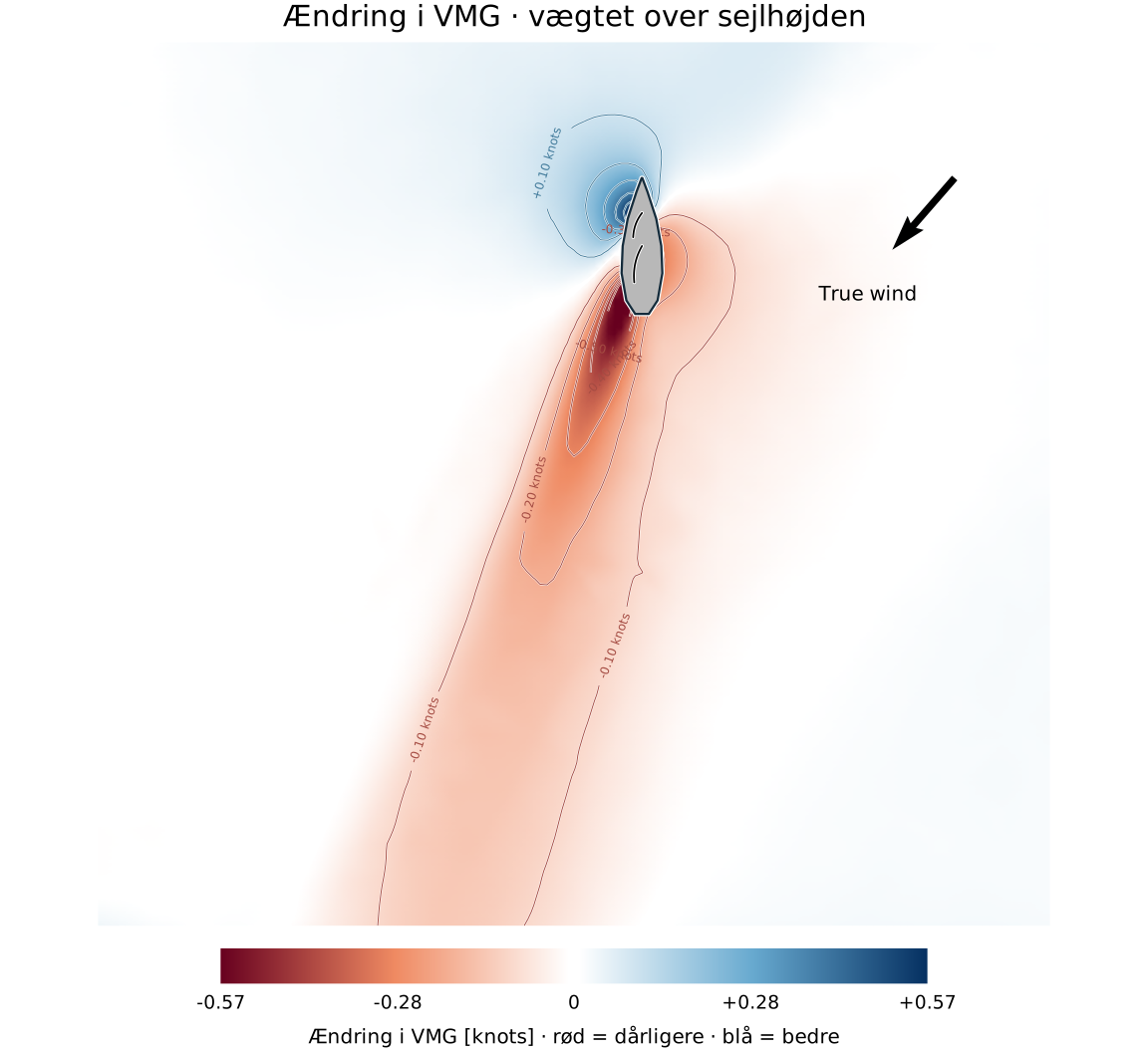
This map comes from a simulation of a boat sailing at 6 knots, with 5 m/s of true wind at 10 m, coming 41° from starboard. The bow points up and the wind comes from the upper right.
Red means less favourable wind; blue means more favourable wind. Wind strength and direction have been combined using a simple weighting that expresses their estimated effect on VMG—progress to windward—in knots for a typical boat.
The long red tail is familiar: sit behind and to leeward and you get dirty air. But follow the red shading around the right-hand side of the boat. Being to windward does not automatically put you in clean air.
Approach from slightly behind on that side and you can encounter both less wind and a header. Your usual advantage in clear air begins to disappear before you have drawn level.
Now read the same picture with it centred on your own boat. Your competitor is ahead and to leeward of you—towards the blue patch.
In that position, your disturbance can give them more wind and a lift, just as their disturbance is giving you less wind and a header.
The difficulty is therefore mutual. You are trying to close the gap in worse conditions while the boat you are chasing may be enjoying better ones. A modest speed or pointing advantage in clear air can be swallowed by that difference.
The two maps below separate the effects, using the same estimated VMG scale.
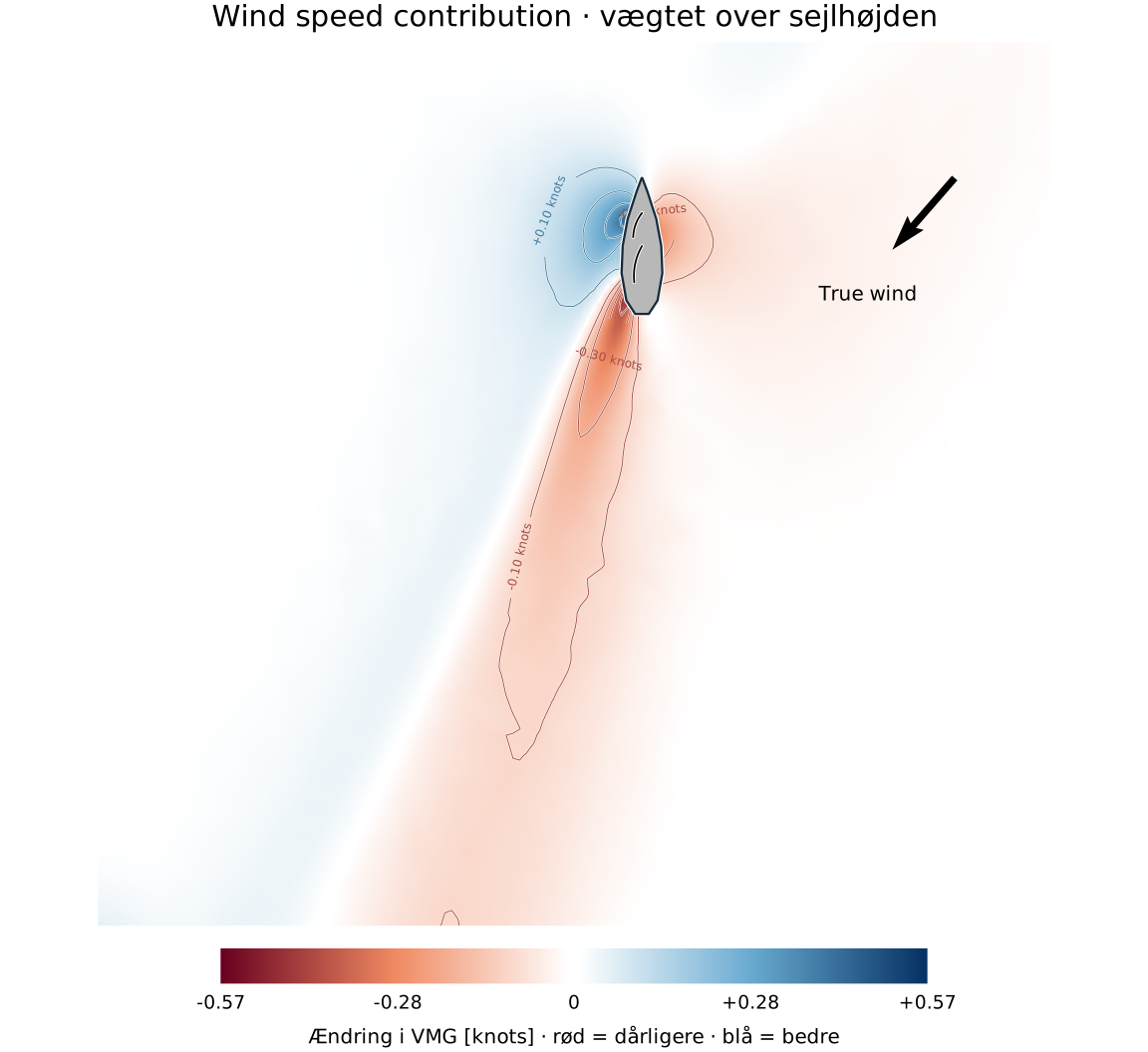
The loss of wind strength makes it harder to keep moving. Trying to hold a high lane can leave you short of speed, while bearing away to rebuild it costs height.
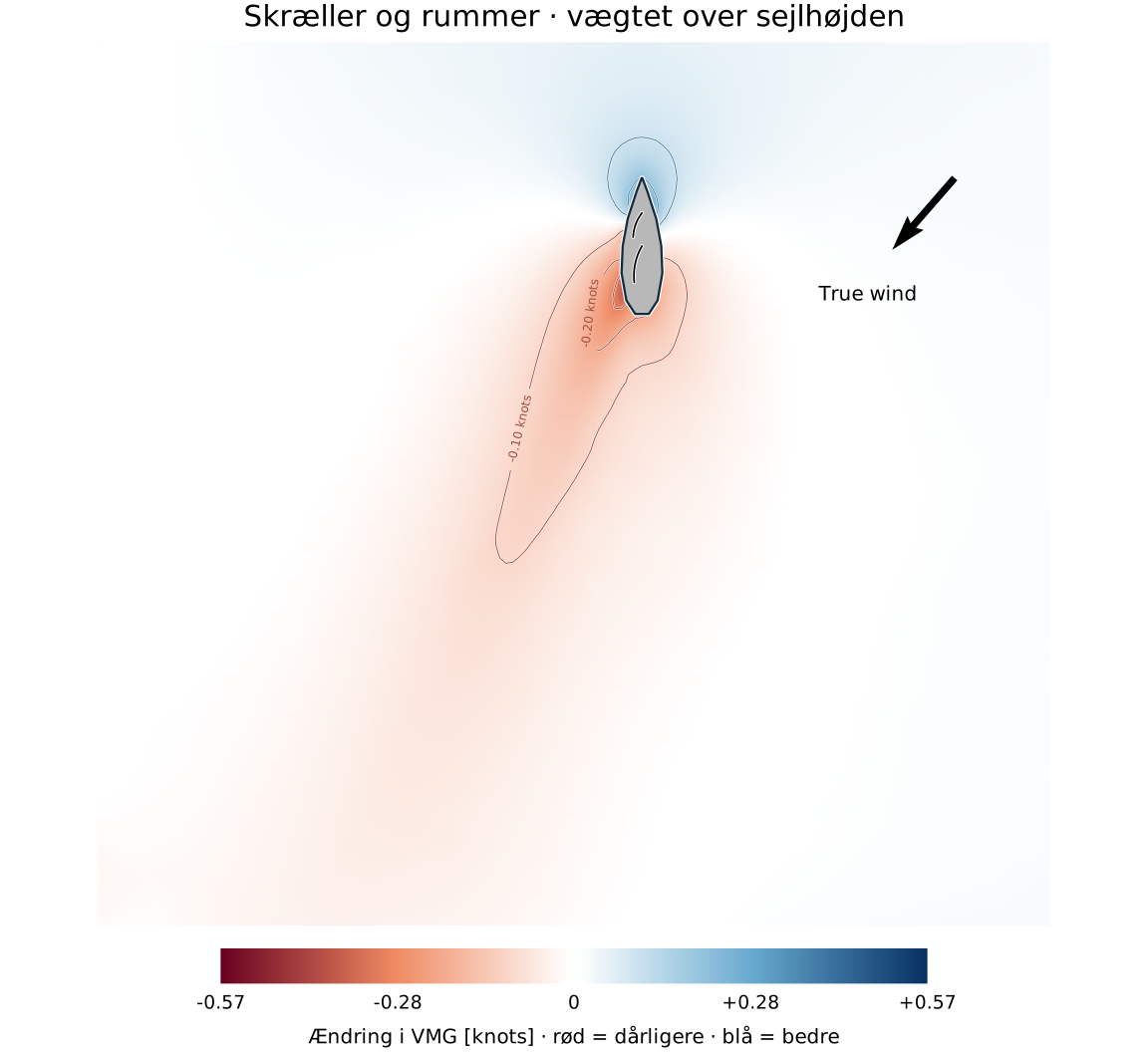
The header adds another obstacle: the wind comes more from ahead, making the course you wanted to hold harder to sail. Meanwhile, the lift in the favourable patch helps the other boat’s position.
If you have stopped gaining, trying harder to pinch over the other boat may simply keep you in the same unfavourable relationship. Tacking into clear air can be the better move, giving you room to use your boat’s normal speed and pointing ability again.
The useful question is whether your advantage in clear air is still available where you are actually sailing.
The Onsdagsbanen CFD model supplies the single-boat wind field, averaged over the sail height with weights based on sail chord. The two-boat explanation is a qualitative interpretation; this is not a simulation of a passing manoeuvre. The VMG values are approximate, and the result remains exploratory because the background wind-profile check failed.